The Future of Secure 3D Web Applications
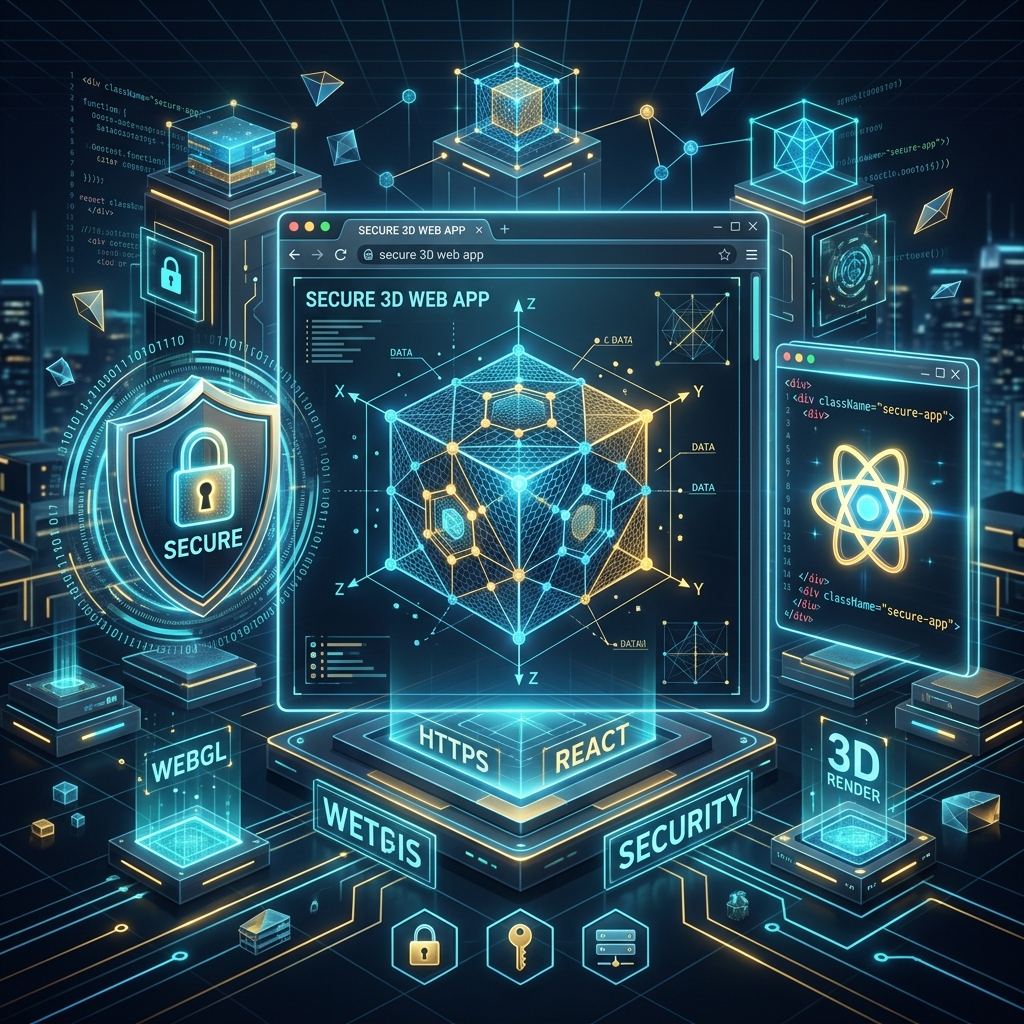
In the rapidly evolving landscape of web development, the integration of 3D graphics is no longer a luxury—it's becoming a standard for immersive user experiences. However, as we move from flat 2D interfaces to complex 3D environments using technologies like React Three Fiber and Three.js, we face a unique set of security challenges.
As a Cyber Security Analyst and a Software Engineer, I’ve spent considerable time exploring how we can build 3D applications that are not only visually stunning but also resilient against modern threats.
1. The Immersive Attack Surface
3D web applications introduce new vectors for exploitation. From buffer overflows in WebGL shaders to resource exhaustion attacks that can freeze a user's browser, the attack surface is larger than many developers realize.
When we build platforms like Studio3D, we must ensure that the 3D assets themselves—the GLTF/GLB models—are sanitized. Maliciously crafted 3D files can sometimes exploit vulnerabilities in the underlying rendering engine.
2. Real-time Data Integrity
In interactive 3D configurators, users are often manipulating data in real-time. Whether it's changing the material of a 3D model or negotiating a price (as seen in the Studio3D order workflow), maintaining data integrity is paramount.
Securing the state synchronization between the 3D frontend and the backend API requires robust encryption and validation at every step. A secure 3D application must ensure that the user is only authorized to modify the parameters intended by the developer.
3. Protecting Intellectual Property
For companies showcasing proprietary 3D designs, protecting the intellectual property (IP) of the models is a major concern. While it's impossible to completely prevent "ripping" of assets once they are in the client's memory, we can implement defensive measures:
- Model Decryption: Decrypting assets on-the-fly in memory.
- Obfuscation: Making the underlying mesh data harder to reconstruct.
- Token-based access: Ensuring only authenticated users can fetch high-fidelity models.
4. The Path Forward
The convergence of Cybersecurity and 3D Web Development is where I find the most exciting challenges. By applying security-by-design principles to 3D ecosystems, we can create experiences that are both breathtaking and safe.
The future belongs to those who can bridge the gap between the digital aesthetic and digital defense. Whether you're building an academic hub like HM Nexora or a 3D customization tool, security must be the foundation upon which the 3D world is built.
Haseeb Ullah is a Software Engineer and Cyber Security Analyst specializing in secure 3D web systems and advanced networking.